

This hub puts all of my favorite phonological and phonemic awareness resources into one convenient location! Whether you’re new to structured literacy, trying to figure out the difference between phonological and phonemic awareness, or you’re an experienced practitioner who wants to improve your instruction and evaluations, you’ll find helpful blogs and resources here.
Phonological and phonemic awareness are two concepts that I didn’t fully understand as a new special education teacher. For years, I thought instruction in these areas was only for preschool or kindergarten-aged students. I just could not remember the difference between phonological awareness and phonemic awareness, and repeatedly looked up the definitions to remind myself. As I developed my knowledge of structured literacy and the science of reading research, I came to understand how integral these skills are to the building of foundational literacy skills. As a result, I’ve written a handful of blogs related to it, and I’ve bookmarked some of my favorite outside resources.
Bookmark this page! It links to several blogs and articles. You’ll want to take your time working through them. Set a goal to explore a couple of blogs or articles per week, allowing time to reflect on how your new knowledge can shape your instruction and your evaluations.
Before we get into the resources, let’s make an important distinction: what is the difference between phonological awareness and phonemic awareness?

A key concept: Phonemic awareness is under the umbrella of phonological awareness.
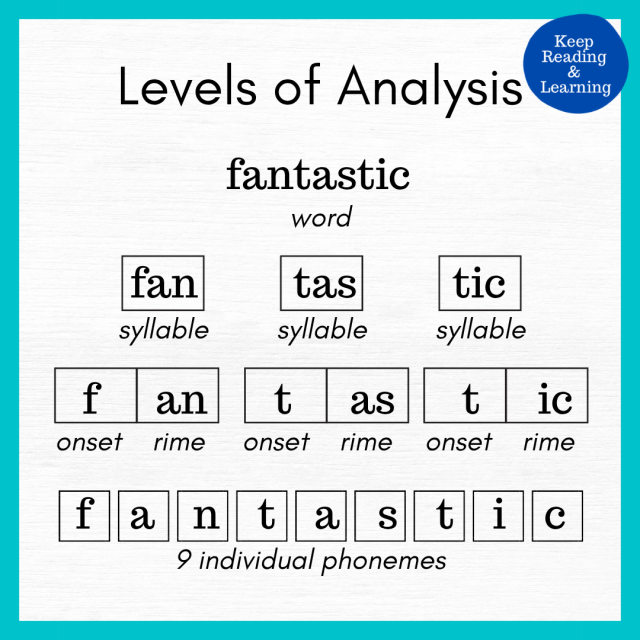
Phonological awareness is the ability to notice and manipulate speech sounds at the sentence, word, syllable, onset/rime, and phoneme levels. Examples of phonological awareness activities include counting words in a sentence, deleting a syllable from a compound word, and changing the first sound in a word to come up with a list of rhyming words.
A phoneme is the smallest unit of sound, so phonemic awareness is the ability to notice and manipulate these smallest units of sound. Examples of phonemic awareness activities include blending four sounds into a word, deleting the /k/ sound from the word cat, and changing the last sound in a word to make a new word.
This means that phonological awareness is related to speech sounds at all levels, while phonemic awareness refers specifically to the phoneme (individual sound) level.
Start Here: Basic Information about Phonological Awareness and Phonemic Awareness
Keep Reading and Learning’s Blogs
- The Role of Phonological Awareness and Rapid Naming in the Development of Early Reading Skills Learn what phonological awareness is, why it should be assessed as part of any reading referral, and how to help your students build a strong foundation.
- Should We Practice Phonemic Awareness with Letters? Learn what the National Reading Panel states about whether or not to include letters in your phonemic awareness instruction.
- 7 Myths about Phonological Awareness: What Every Educator Should Know Phonological awareness is often misunderstood. This blog is designed to clear up misconceptions and provide evidence-based insights.
Phonological and Phonemic Awareness Resources from Reading Rockets
Reading Rockets is an excellent resource if you ever have questions about literacy. The following are some of the links I’ve referred to often over the course of my career:
- Free, Self-Directed Phonological and Phonemic Awareness Course Bonus: you can take a quiz to earn a certificate, which your district may accept for pay scale advancement or recertification.
- Phonological and Phonemic Awareness Activities for Children, by Age: Pre-Kindergarten, Kindergarten, First Grade, and Second Grade
- Phonological Skills Milestones: Wondering if it’s normal that your six-year-old is struggling with blending three sounds into a word? Learn the age at which 80-90% of typical students have mastered specific phonological skills. This is a resource I refer to often when writing evaluation reports.
The Connection Between Phonological Awareness and Dyslexia
Poor phonological processing skills are a common underlying weakness in individuals with dyslexia. Want to learn more? Visit Keep Reading and Learning’s Dyslexia Resource Hub, which includes resources for parents, general education teachers, specialists, and administrators.

Evaluation of Phonological and Phonemic Awareness Skills: Writing Better Reports
Blog: Understanding the CTOPP-2: A Guide for Teachers and Parents If a student is struggling with early reading skills and you want to know why, the CTOPP-2 is likely to reveal part of the puzzle.
Blog: CTOPP-2 Score Interpretation: How to Write Clearer Reports For educators who are already familiar with the CTOPP-2, this blog will help you write clear, helpful evaluation reports that truly reflect a student’s needs.

Professional Development Resources
Blog About Paid Courses: If you’re looking for a college-level course to expand your understanding of dyslexia or foundational literacy development, browse this list of courses.
Free Course: College credits are expensive! If you’re minding your budget, consider the free, self-directed phonological and phonemic awareness course from Reading Rockets.
Phonological and Phonemic Awareness Resources to Use with Kids and Their Families
Blog and Game: Paws and Spell: the Word Chain Game You’ve Been Waiting for! Paws and Spell is an online word chain activity that incorporates phonics and phonemic awareness into one high-impact, no-prep activity.
Blog: 11 Summer Phonics Activities to Keep Literacy Skills Sharp From playing word games on road trips to sneaking in word chains with a furry twist, gather some ideas you can share with families for summer break or school-year home practice.
Blog and Book Recommendations: Talking to Kids About Their Learning Differences If you’re working with a child with poor phonological awareness, you might be wondering how to support them emotionally. This post offers practical conversation tips and recommendations for kid-friendly books that break down learning differences. We can empower our children to embrace their unique brains!

Your Phonological and Phonemic Awareness Resources, All in One Place
Phonemic and phonological awareness are foundational to literacy development, and understanding them more deeply will make you a more effective teacher, evaluator, and advocate for your students. Bookmark this page and work through the resources at your own pace. If you found this hub helpful, explore Keep Reading and Learning’s Tutoring Hub and Dyslexia Hub for more evidence-based resources.

